Weekly Doubt: Turning an Unreliable Narrator Into a Book Club Group Project
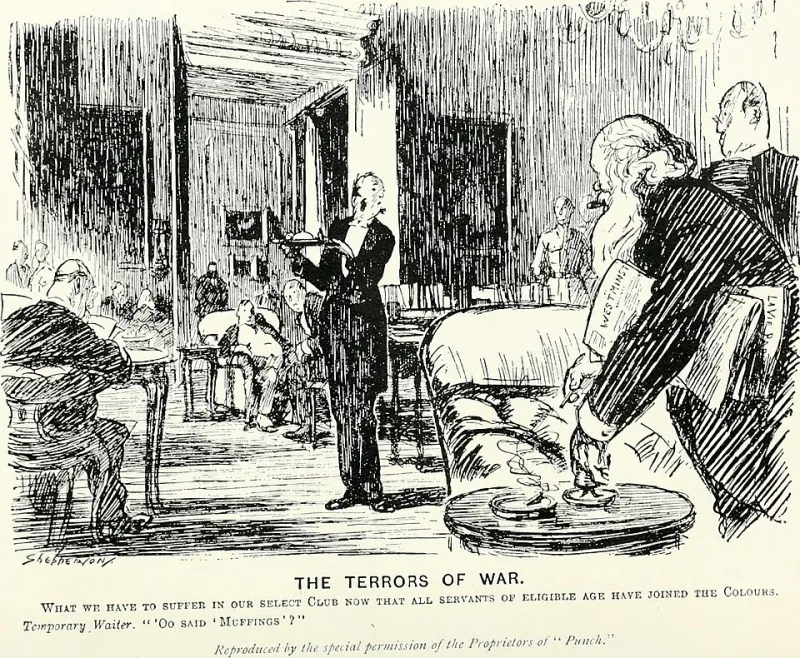
Photo: Internet Archive Book Images, No restrictions, via Wikimedia Commons
There is a special kind of silence that follows a serial chapter when the narrator has just said something that does not add up. In a binge read, you might flip the page, mutter 'sure, buddy,' and keep going. In a weekly serial, you close the tab and stare at the ceiling. Then you open the group chat. The gap between installments does something strange to an unreliable narrator: it turns private suspicion into a group project.
That is not a bug. It is one of the most interesting things serial fiction does. When a story arrives in pieces, readers do not just meet a narrator who may be lying. They live with that narrator for days, reread the same paragraph, and build cases for and against them. The chapter break becomes a waiting room for doubt. And book clubs that read serials can use that waiting room well, as long as they keep the conversation anchored to what has actually been published.
The Chapter Break Is a Waiting Room for Suspicion
A traditional novel can hide a narrator's unreliability in plain sight because the reader has no time to stop and check. Serial fiction gives readers a forced pause. That pause is where theories grow. Someone notices that the narrator describes a room in too much detail but skips the one conversation that matters. Someone else points out that every character who contradicts the narrator gets described as 'nervous' or 'dramatic.' By the next chapter, the comment section is less a discussion and more a evidence board with string.
On H-Novel, that board is part of the reading experience. Readers compare notes between drops, quote lines back to each other, and form camps. The narrator is not just a character anymore. They are a suspect, a witness, and a defense attorney all at once. The weekly wait amplifies every inconsistency because readers have time to ask why the inconsistency is there.
Why the Wait Changes the Verdict
Binge readers tend to judge a narrator in private. Serial readers judge in public. That changes the social stakes. If you announce in a comment thread that the narrator is definitely lying, you now have a position to defend. If you insist the narrator is trustworthy, you may find yourself explaining away strange details for weeks. The narrator becomes a team you picked, even if you picked them by accident.
This is especially true for book clubs. A group that meets monthly around a completed novel can discuss an unreliable narrator as a finished puzzle. A group reading a serial is discussing a puzzle while pieces are still being handed out. The conversation has to be different. It has to be honest about uncertainty without turning into a spoiler hunt. It has to let readers distrust the narrator without demanding that the story confirm them immediately.
The Comment Section as Evidence Locker
Serial comment sections are wonderful and dangerous. They are wonderful because readers catch things a solo reader might miss: a repeated phrase, a timeline that does not line up, a character who seems to know too much. They are dangerous because some readers arrive with outside knowledge. They may have read ahead, found spoilers, or pieced together a future reveal from the author's other work. Once that knowledge enters the thread, the group conversation tilts.
A good book club rule is simple: no evidence from future chapters. Use only what the serial has published. If a theory depends on a chapter that has not dropped yet, put it in a parking lot. That keeps the discussion about the narrator's reliability from becoming a race to see who knows more. It also keeps the fun where it belongs: in the gap.
A Spoiler-Safe Framework for Book Clubs
When your group meets between installments, try four questions. They work for any unreliable narrator, but they are especially useful when everyone has been sitting with the same chapter for a week.
1. What did the narrator tell us, and what did we actually see?
Separate the narrator's interpretation from the events on the page. If the narrator says a character was 'furious,' ask whether the dialogue showed fury or whether the narrator labeled it. The gap between label and evidence is often where unreliability lives.
2. Which details would change if the narrator were lying?
This is a counterfactual question, not a prediction. If the narrator were shading the truth, which specific line would look different in hindsight? This keeps the group focused on the current text instead of guessing at future reveals.
3. Who benefits from this version of events?
An unreliable narrator does not have to be malicious. They might be protecting someone, protecting themselves, or simply misunderstanding. Asking who benefits from the narrator's framing opens up motive without requiring a verdict.
4. What would we need to see next to revise our view?
This is the spoiler-safe prediction question. Readers can say what kind of evidence would change their mind without claiming to know what happens. It also gives the group a way to disagree productively. One reader might need a corroborating witness. Another might need the narrator to contradict themselves directly. Both answers are valid.
Defending the Narrator Is Part of the Fun
Some readers distrust an unreliable narrator immediately. Others defend them for chapters. Neither response is wrong. In serial fiction, the defense is often more interesting than the suspicion because it has to survive the wait. A reader who argues that the narrator is reliable is making a bet about the story's trust contract. They are saying the inconsistencies are intentional but not damning. That bet can be wrong, and that is fine. The point is not to guess correctly. The point is to notice how the story is asking you to read.
Book clubs can make room for both camps by treating suspicion as a spectrum rather than a binary. You do not have to decide whether the narrator is a liar in chapter twelve. You can decide what kind of liar they might be, and what kind of story would make that lie matter.
The Long Game of Trust
Serialization teaches readers to hold uncertainty longer than a binge read does. That is a skill, and it is worth practicing. The next time your group meets after a cliffhanger, do not rush to solve the narrator. Ask the four questions. Keep the evidence to published chapters. Let the gap do its work. The narrator may be lying, or they may just be human. Either way, the conversation between installments is part of the story now.